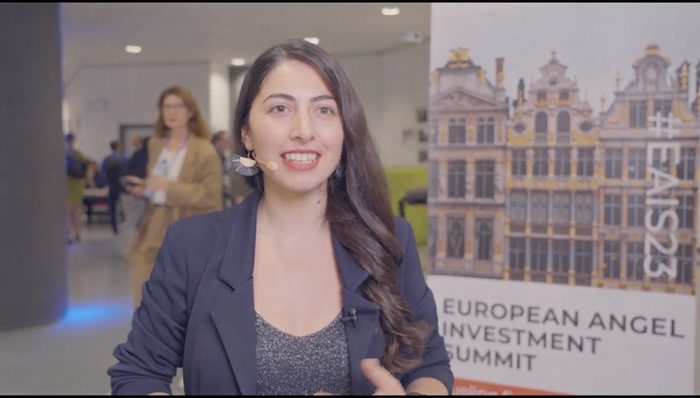
Women have historically made up something like 10–20% of active European angel networks — but in specialized, cohort-based training, that climbs to 30–40%, with the strongest programs proving 50% parity is achievable, not aspirational. That's the stat behind the point I made at the EBAN Summit, and I think it usually gets discussed as two separate stories when it's really one: closing the gender gap in angel investing and building a more sustainable, purpose-driven capital base aren't separate goals.
Here's the part that doesn't get said enough: closing that gap isn't just a fairness story, it changes what gets funded. Business angels invest their own personal capital, not an LP's — and that changes an investor's relationship to the money in a real, observable way. Institutional funds answer to a fiduciary mandate; angels answer to themselves, and when people are investing wealth they built and care about, they gravitate toward companies whose mission they actually believe in, without anyone mandating it. That's not a soft claim — it shows up as a pattern: portfolios with more diverse investor bases skew toward stronger governance and more sustainable unit economics, and toward backing healthtech, clean technology, and inclusive consumer businesses that a narrower, more homogenous investor base tends to overlook.
So the practical version of my argument is this: if you want more sustainable, purpose-driven capital in European startups, the fastest lever isn't a new ESG mandate — it's getting more women trained and active as angels, because a more diverse investor base arrives at purpose-driven investing on its own, without being told to.
From the EBAN European Business Angel Network Investor Summit, whose own gender-balance manifesto covers this data in more depth. Want to be part of closing this gap? Book a call, or join WIL through SIA Angel Hub.