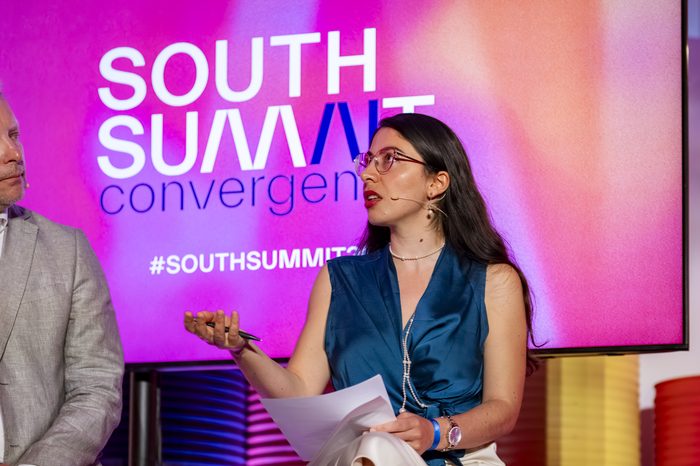
In 2025, Europe deployed only 22% of what the U.S. put into startups — despite the two economies being broadly comparable in size. That's the real gap I dug into moderating South Summit's Growth Stage panel: not "is Europe behind," but where, specifically, and is it closing.
That gap isn't really about capital availability. It's a mindset gap first. U.S. investors and founders default to "what if this works" — they underwrite the moonshot. European capital, especially from legacy institutions and high-net-worth individuals, still defaults to "what can go wrong," and steers toward real estate, bonds, and savings instead. Add in that large European corporates tend toward build-or-kill internal strategies rather than aggressive acquisition, and you get structurally slower velocity at every level of the ecosystem, not just at the check-writing stage.
Underneath the mindset gap sits a real structural one. Europe isn't one market — it's 27 jurisdictions and 24 official languages, with local regulatory "gold-plating" layered on top of shared frameworks like GDPR. Founders here deal with tax and stock-option structures that are genuinely punitive compared to Delaware or U.S. QSBS treatment, which makes employee wealth-building through equity much harder to pull off. The predictable result: a steady drain of European unicorns relocating to the U.S. once they need deeper series funding or a frictionless path to IPO — we lost dozens again last year alone.
None of that means writing Europe off, and I don't. European engineering, product, and operational talent competes with anywhere in the world — that was never the gap. What's changed is the emergence of real proof points: European unicorns tripled between 2018 and 2025, reaching 400 total, and smaller, highly digitized ecosystems like Estonia are demonstrating that friction-free company formation and progressive tax policy are achievable within Europe, not just something you get by leaving it. Add the newer EU-level pushes — tech sovereignty agendas, coordinated scale-up funds, efforts to unlock institutional pension capital — and the trajectory is real, even if the gap hasn't closed yet.
On the panel: Hedi Mardisoo, co-founder and CEO of Cacher; Henrik Gebbing, co-founder of Kosa Prima; and Martin Tantow, Partner at Pegasus Tech Ventures.
From South Summit's Growth Stage Keynote Panel. Watch the full panel → This gap is tracked year over year in Atomico's State of European Tech report, the industry's standard benchmark for European-vs-U.S. venture capital deployment. Want to go deeper on where you fit into this? Book an advisory call, or see what else SIA Angel Hub is building.