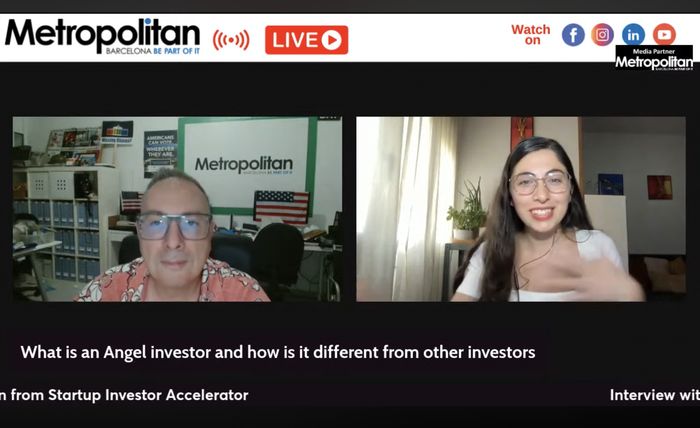
A resilient angel portfolio needs 20 to 40 startups, not one or two — that's the unglamorous math behind angel investing, and it's where I started when Victor Horcasitas asked me, for Metropolitan, what angel investing actually is beyond the pitch-deck version.
What an angel investor actually is. You're deploying personal capital into early-stage, pre-seed and seed companies in exchange for equity — earlier than most venture funds are willing to take the risk. The distinction that matters isn't the check size, it's the source of capital and the kind of value you bring: VCs manage other people's money (LPs — institutions, pensions, high-net-worth individuals) through a structured fund; angels write from their own balance sheet, and what a good angel actually contributes is disproportionately mentorship, connections, and steady judgment during a founder's most fragile early months — not just the wire transfer.
Why do it. Setting aside the return profile — startup investing is genuinely counter-cyclical, largely uncorrelated with public markets or real estate, which makes it a real diversification tool rather than just a speculative bet — the honest reasons people stay in it long-term are usually about continuous learning and a real seat in deciding which innovations actually reach the market.
The risk, stated plainly. This is not a place to build your first pot of savings. Startup mortality is high, and angel investing should sit alongside capital you can genuinely afford to lose over a long, illiquid horizon — which is exactly why diversification isn't optional. The standard professional benchmark is 20 to 40 startups in a resilient portfolio. Run the math on a common accredited-investor framework: a $1M net worth, capping startup exposure at 10% ($100,000), spread across 20 companies, lands you at roughly $5,000 tickets — smaller than most founders will take from an individual directly, which is exactly why group syndicates and pooled vehicles exist: they let smaller checks combine into one professionalized allocation a founder can actually accept.
How you actually evaluate a deal without the public filings or track record a listed company gives you: the team's resilience and complementary skills first, then whether the market is large and painful enough to be worth solving, then unit economics and a real path to monetization, then whether the business can credibly go beyond its home market.
The gap that still needs closing. European data has long put angel investors at roughly 90% men, 10% women. That's shifting — specialized, cohort-based training is pushing female participation toward 30–40% within those specific cohorts. That's not a side statistic to me — it's why I helped build WIL, and it directly correlates with more capital reaching women-led founders, which is the actual point.
From my interview with Victor Horcasitas for Metropolitan. Watch it here → Considering your first check? Book an advisory call, or read more about SIA Angel Hub.